
Finding the Sacred in the Everyday
Explore the deep theological reflections, uplifting homilies, and the rich tradition of Spiritan Sounds.



Latest Reflections
View All
Do not Fear, Only Believe
Jesus reminds us: “Do not fear, only believe.” Whether your prayer is loud or silent, trust that He is never late and that death never has the final word.
Discerning our ministry or Apostolate
Our struggles often shape our calling. Like St. John Bosco, God uses our history to define our apostolate and heal others. Discerning His path brings peace.
Being a Light to the world
Being a light means living our faith publicly. Jesus calls us to be like a lamp on a stand, using our integrity and values to guide others out of darkness.
Latest Homilies
View All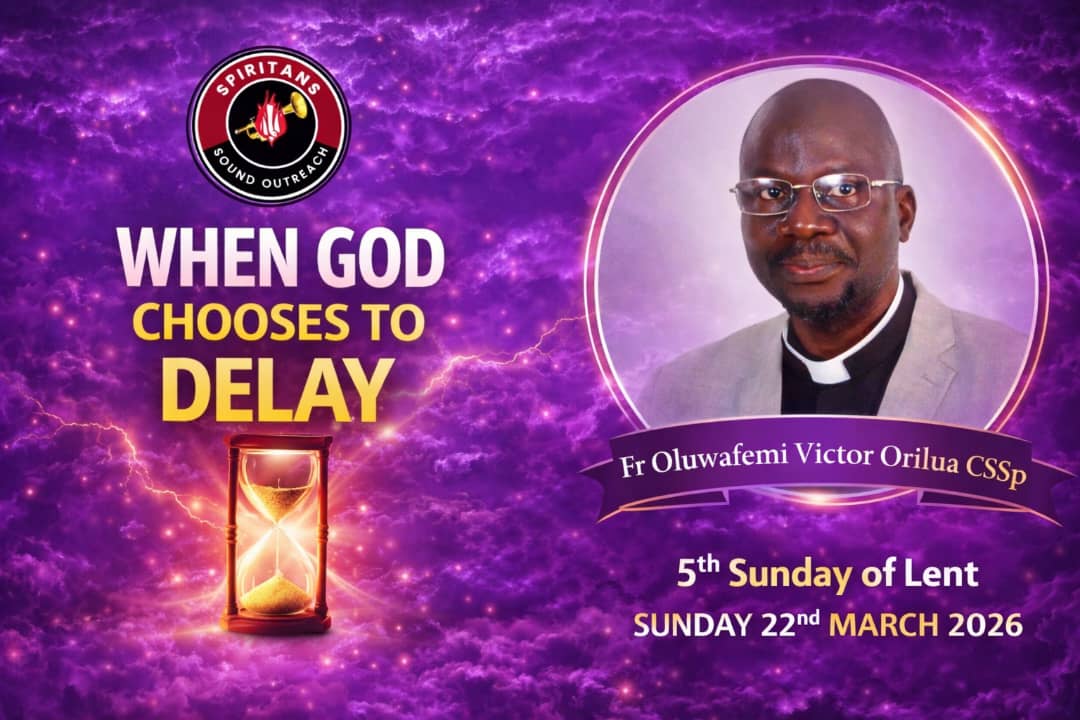
When God Chooses To Delay
Sometimes we find ourselves complaining about the painful situations we go through.
Do not Fear, Only Believe
Jesus reminds us: “Do not fear, only believe.” Whether your prayer is loud or silent, trust that He is never late and that death never has the final word.

Celebrating our Blessedness
True blessedness is an unshakable joy found in total dependence on God. Through the Beatitudes, Jesus invites us to detach from things and find our home in Him.
Latest Prayers
View All
PRAYERS TO UNLOCK DOORS OF BLESSINGS.
PRAYERS TO UNLOCK DOORS OF BLESSINGS Glorious God, everlasting Father, the source of all blessings, all glory and all honour be unto your holy name. I humbly come before your throne of grace to obtain mercy for my times of needs. Look down upon me from your exalted throne. You positioned Simeon, the righteous and […]

PRAYER FOR DIVINE PERFUME
O Heavenly Table of the Sea of love. Holy Spirit, the love of the Father, who made all things and declared that they are all good. I bow my head before your majesty that you may sweep over my soul and make me truly thine. Fill me with the love that flow from your holy […]

PRAYER FOR PRESIDENT MUHAMAD BUHARI AND OUR COUNTRY NIGERIA
A PRAYER FOR PRESIDENT MUHAMMAD BUHARI AND OUR COUNTRY NIGERIA( With Rev Fr Femi Victor Orilua, CSSp) In the name of the Father, and of the Son and of the Holy Spirit. Amen. O Lord! Our help in ages past. You are the Eternal king of all nations. You have the whole world in your […]
Music & Worship
View All"Silence is the root of everything. If you spiral into its center, you will find the source of your light."
— Thomas MertonFrequently Asked Questions
Spiritans Sound Outreach was founded by Rev. Fr. Oluwafemi Victor Orilua, CSSp.
It was established on 1st December 2018.
Spiritans Sound Outreach is a youth ministry of the Holy Ghost Fathers (Spiritans), dedicated to using the arts, media, and creative expression as instruments of evangelization.
Our mission is to discover, nurture, and promote God-given talents in young people, using those gifts for the purpose of evangelization and the spread of the Gospel.
Treasures Unveiler Youth Development Foundation is the registered non-profit arm of Spiritans Sound Outreach. It provides structure for our youth development programs, partnerships, and outreach initiatives.
Treasures Unveiler Magazine is our flagship publication — a faith-based magazine that features youth stories, creative works, spiritual reflections, and news from the Outreach community.
You can contribute articles, artwork, poetry, or testimonies by reaching out to us via our contact page or social media channels. We welcome submissions from young creatives.
The Young Creators Network is a community within Spiritans Sound Outreach that connects young artists, writers, musicians, and creatives who want to use their gifts for God's glory.
You can join by registering through our contact form or by reaching out on our social media platforms. Membership is open to young people who share our vision of faith-driven creativity.
Treasures Unveiled is our annual event that showcases the talents of young members of the Outreach — including performances, art exhibitions, spoken word, and more — as a celebration of God's gifts.
Anyone who shares our faith and vision is welcome. You can become a member by attending our events, joining the Young Creators Network, or connecting with us through our website or social media.
Yes! We hold a weekly Zoom prayer meeting every Friday at 9 PM. This is open to all members and supporters who wish to pray together and deepen their faith.
Yes. One of our notable performance groups is the Graceful Groovers, a dance group that uses movement and choreography as a form of worship and ministry.
You can follow us on our social media channels, subscribe to our newsletter, donate through our website, or purchase our publications. Every act of support helps us reach more young people with the Gospel.